CUTIS URBANA
Mixed media on canvas: charcoal, thread, burnt matter, wood, plaster, acrylic and ink
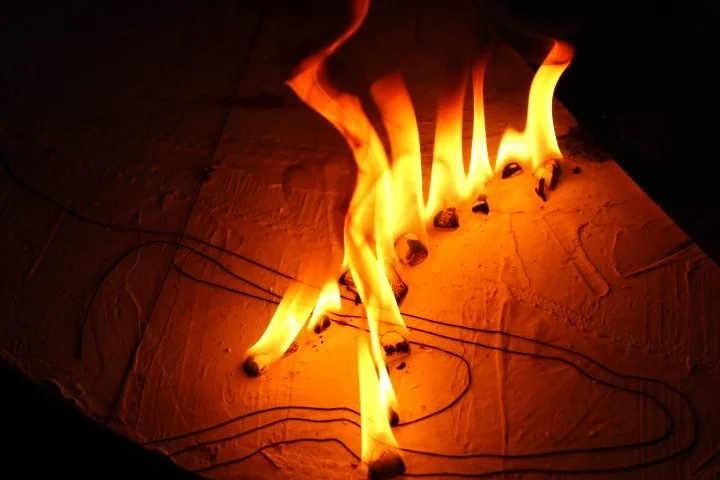
Cutis Urbana is a series of sensitive cartographies: psychogeographic readings of specific Miami neighborhoods, built through the tension between two registers of data. Taut threads, pulled and anchored across the surface, stand in for the measurable, objective forces acting on a territory: capital flows, elevation, property value, the quiet mechanics of climate gentrification. Controlled burning, charcoal, and raw matter register the other register as the the lived, sensory, and emotional residue of a place: what a resident feels rather than what a map records.
Each tondo is treated as a wound and an eye at once: a circular field with no fixed orientation, echoing how "what sits higher" is precisely what determines who stays and who is displaced as sea levels rise. The surface is burned, scarred, and partially repaired, the way a neighborhood is renovated, redlined, or erased and rebuilt.
The first three pieces — Cutis Urbana I, II, III — emerged from research and fieldwork in Miami during a Villa Albertine residency. They form the opening chapter of a broader project mapping the material and emotional memory of gentrifying, climate-exposed territories.
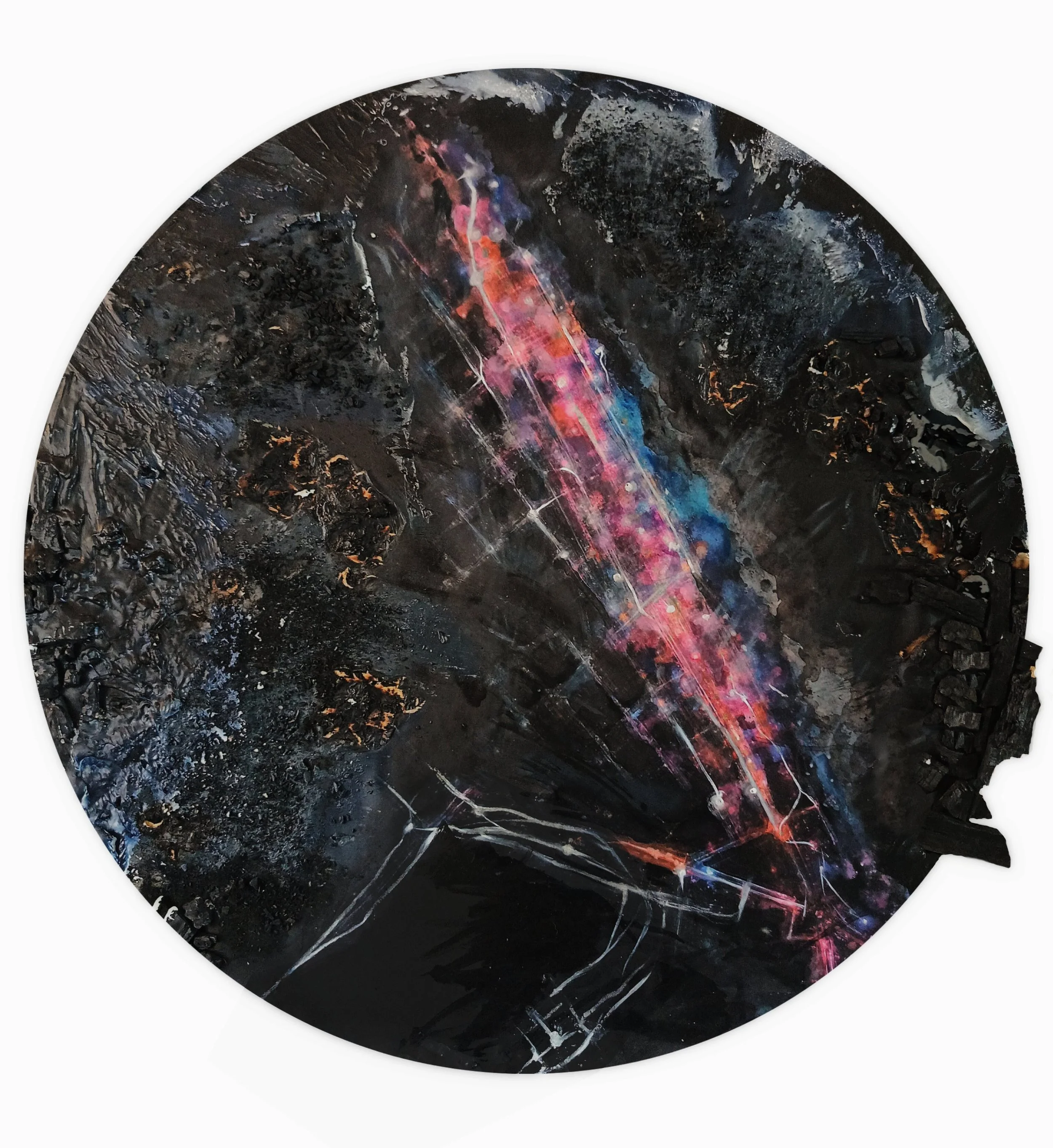
CUTIS URBANA I, 2026
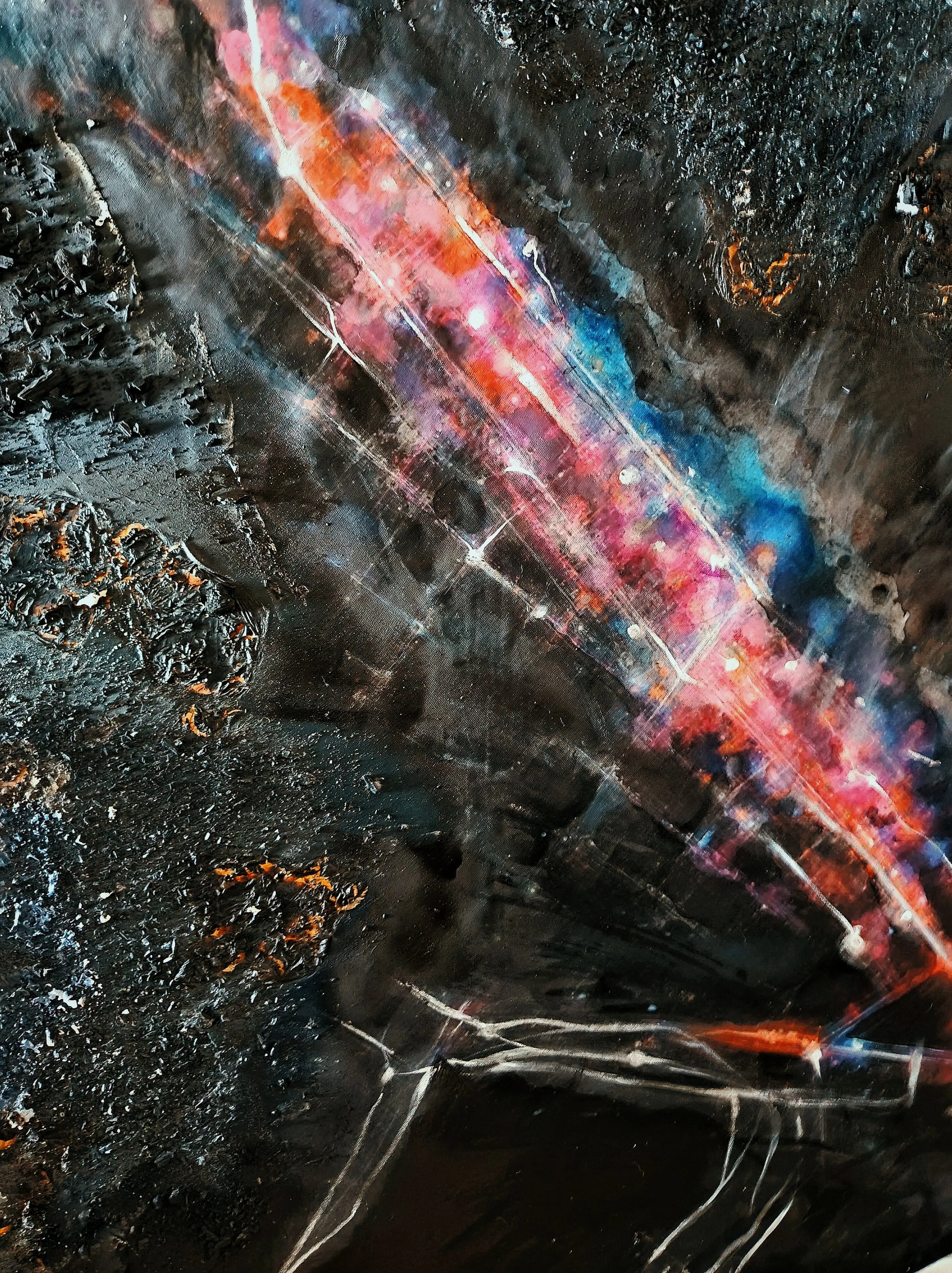
CUTIS URBANA I, 2026

CUTIS URBANA I, 2026
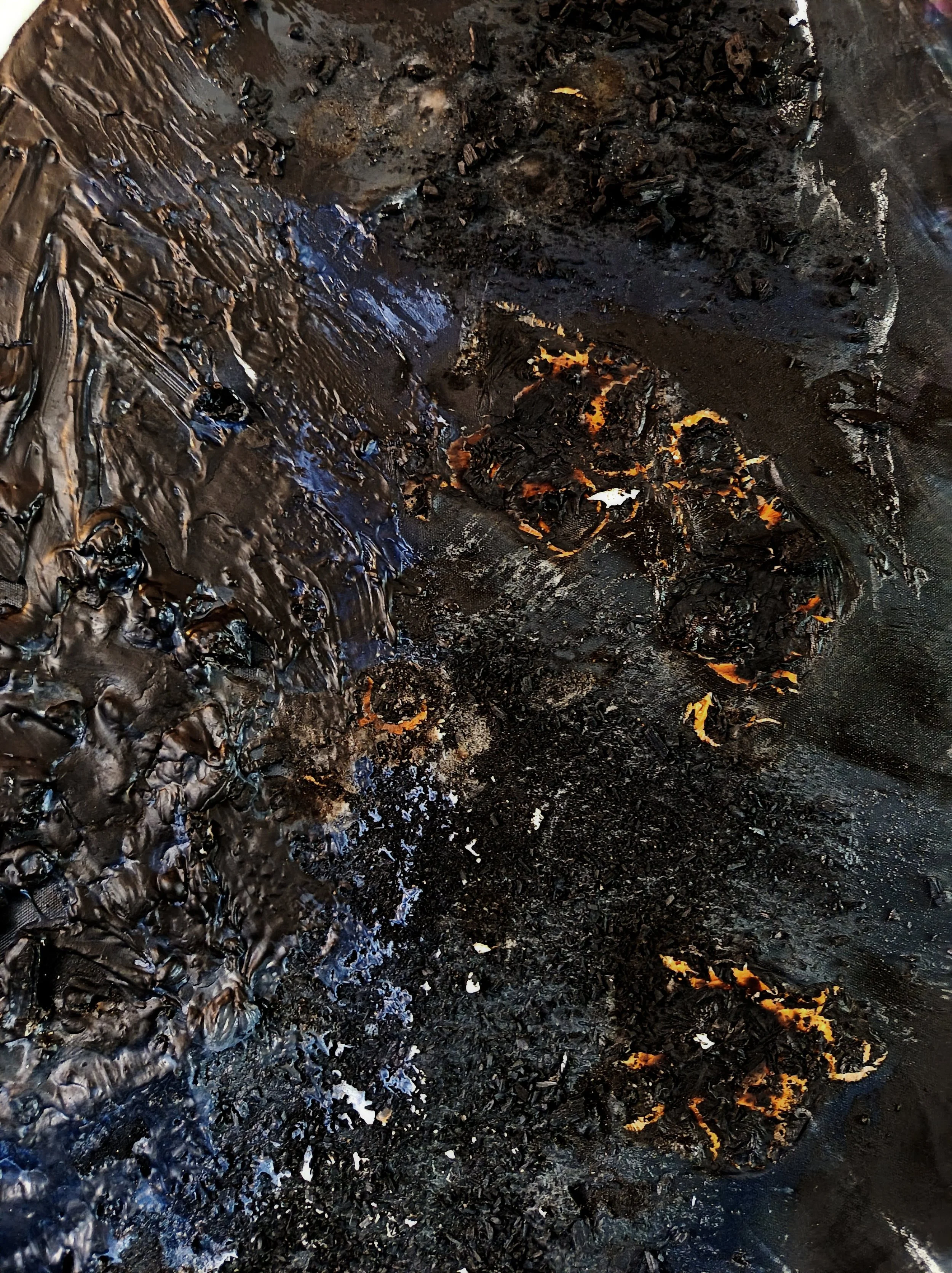
CUTIS URBANA I, 2026
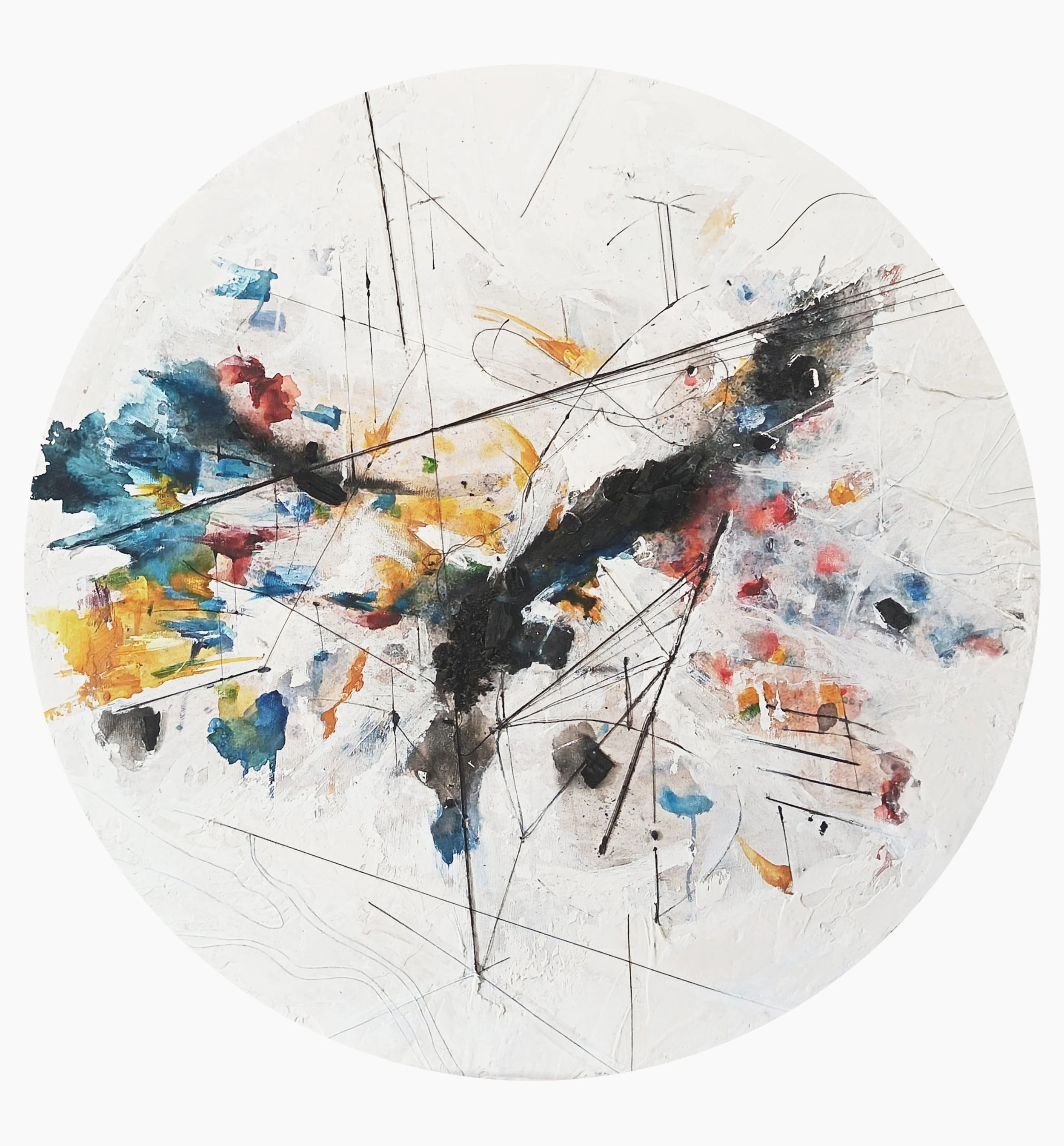
CUTIS URBANA II, 2026
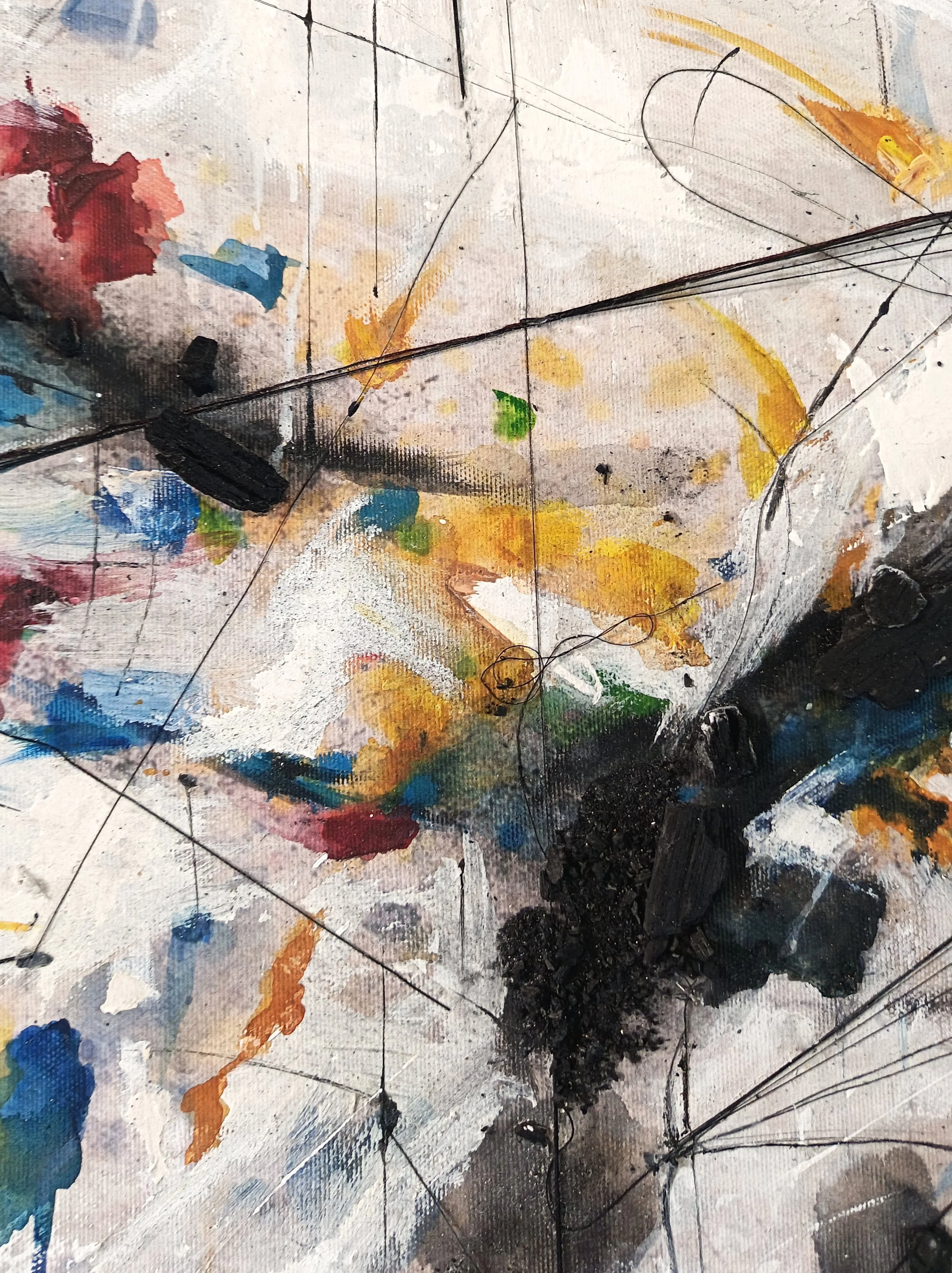
CUTIS URBANA II, 2026
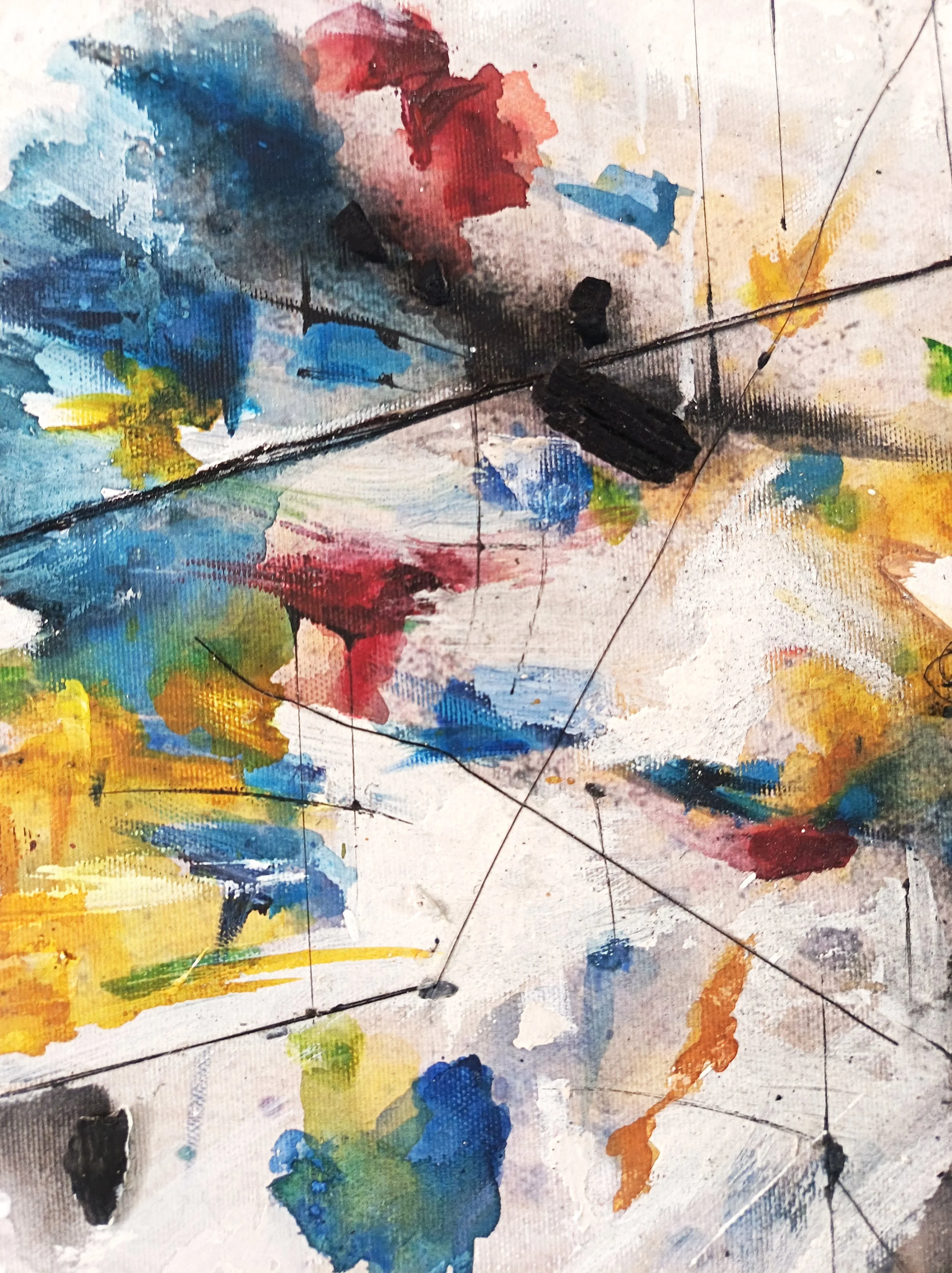
CUTIS URBANA II, 2026

CUTIS URBANA II, 2026
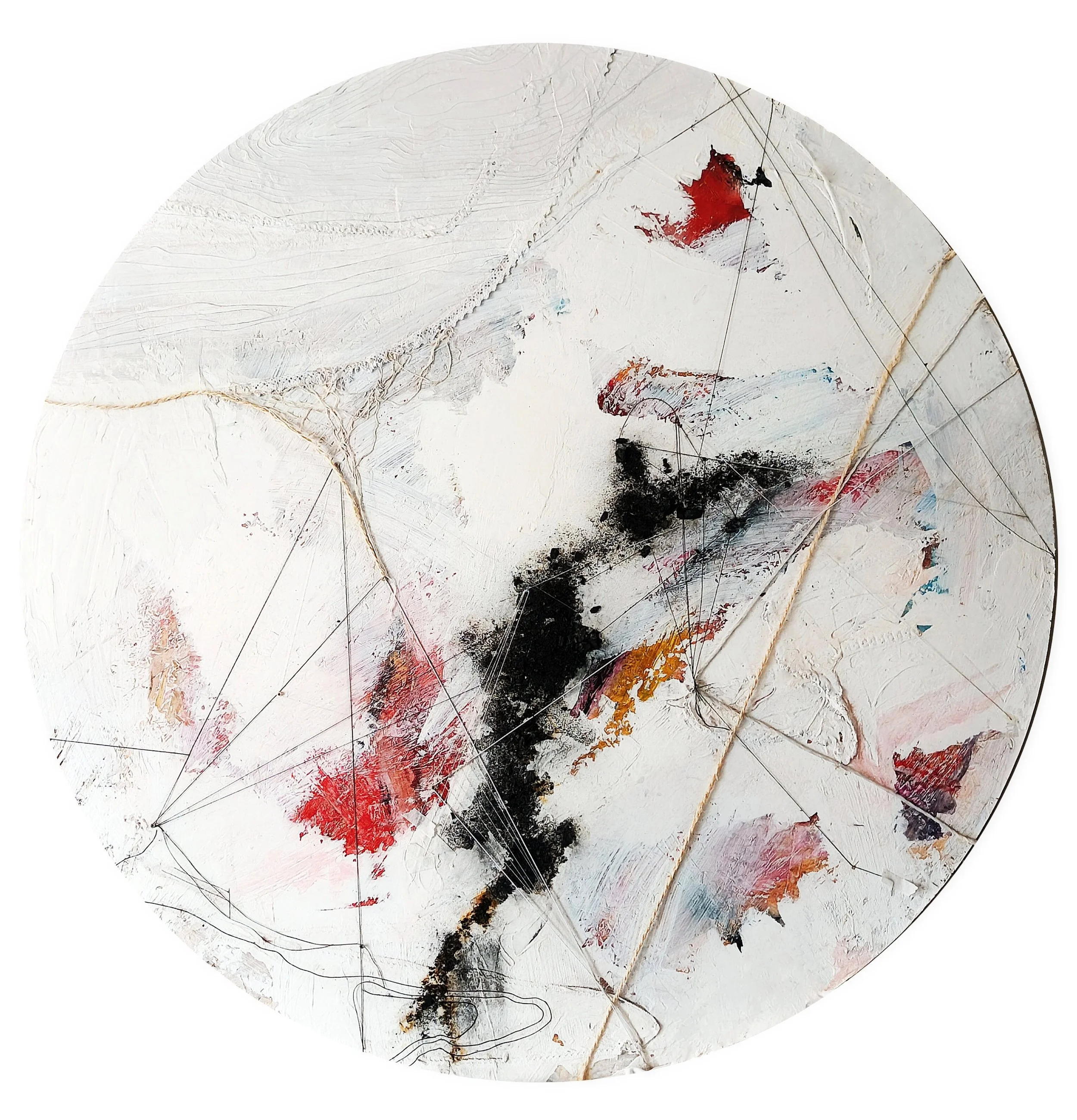
CUTIS URBANA III, 2026 (LITTLE HAITI)

CUTIS URBANA III, 2026 (LITTLE HAITI)
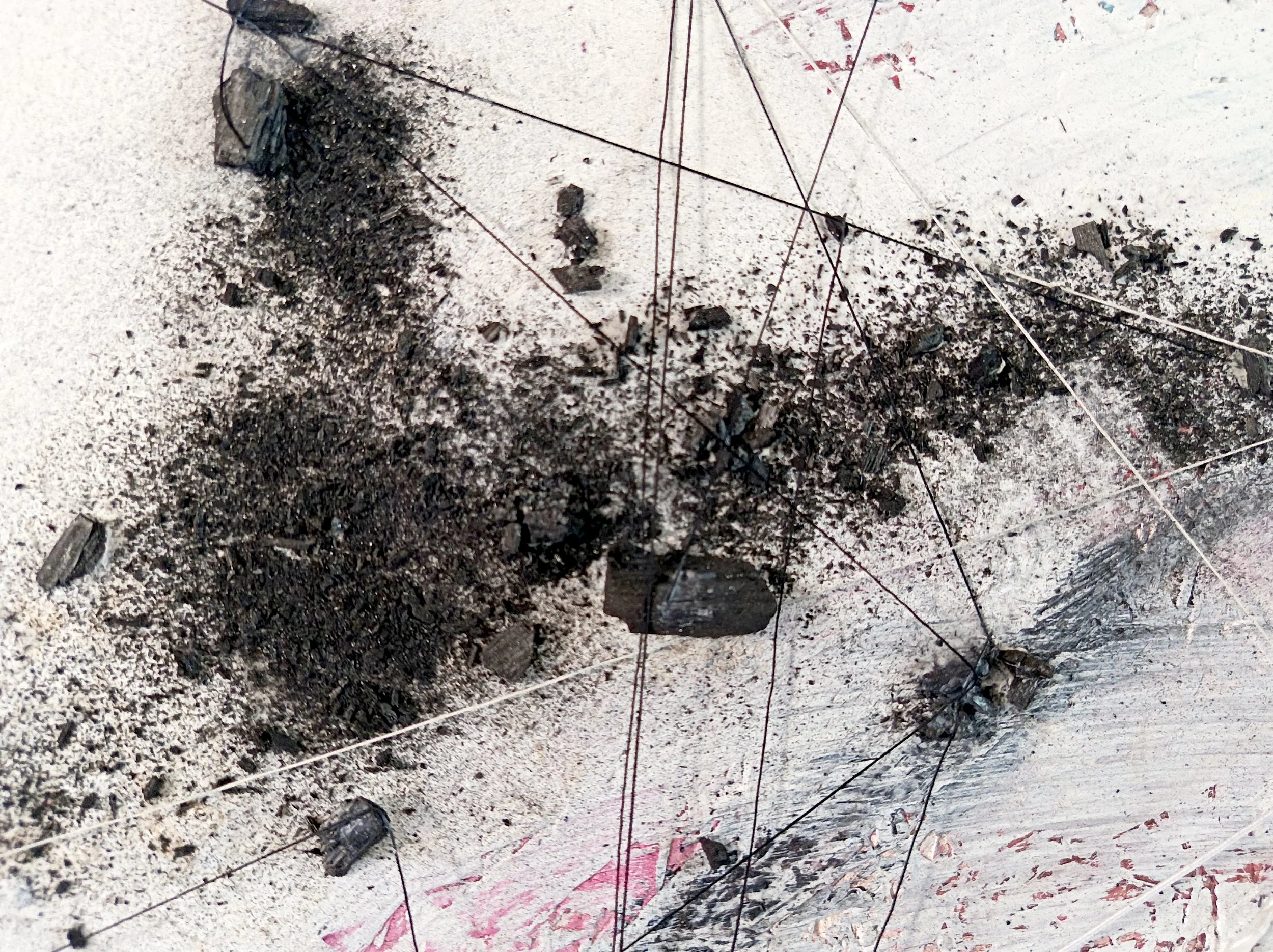
CUTIS URBANA III, 2026 (LITTLE HAITI)

CUTIS URBANA III, 2026 (LITTLE HAITI)

CUTIS URBANA III, 2026 (LITTLE HAITI)
CUTIS URBANA III, 2026 (LITTLE HAITI)
PROCESS
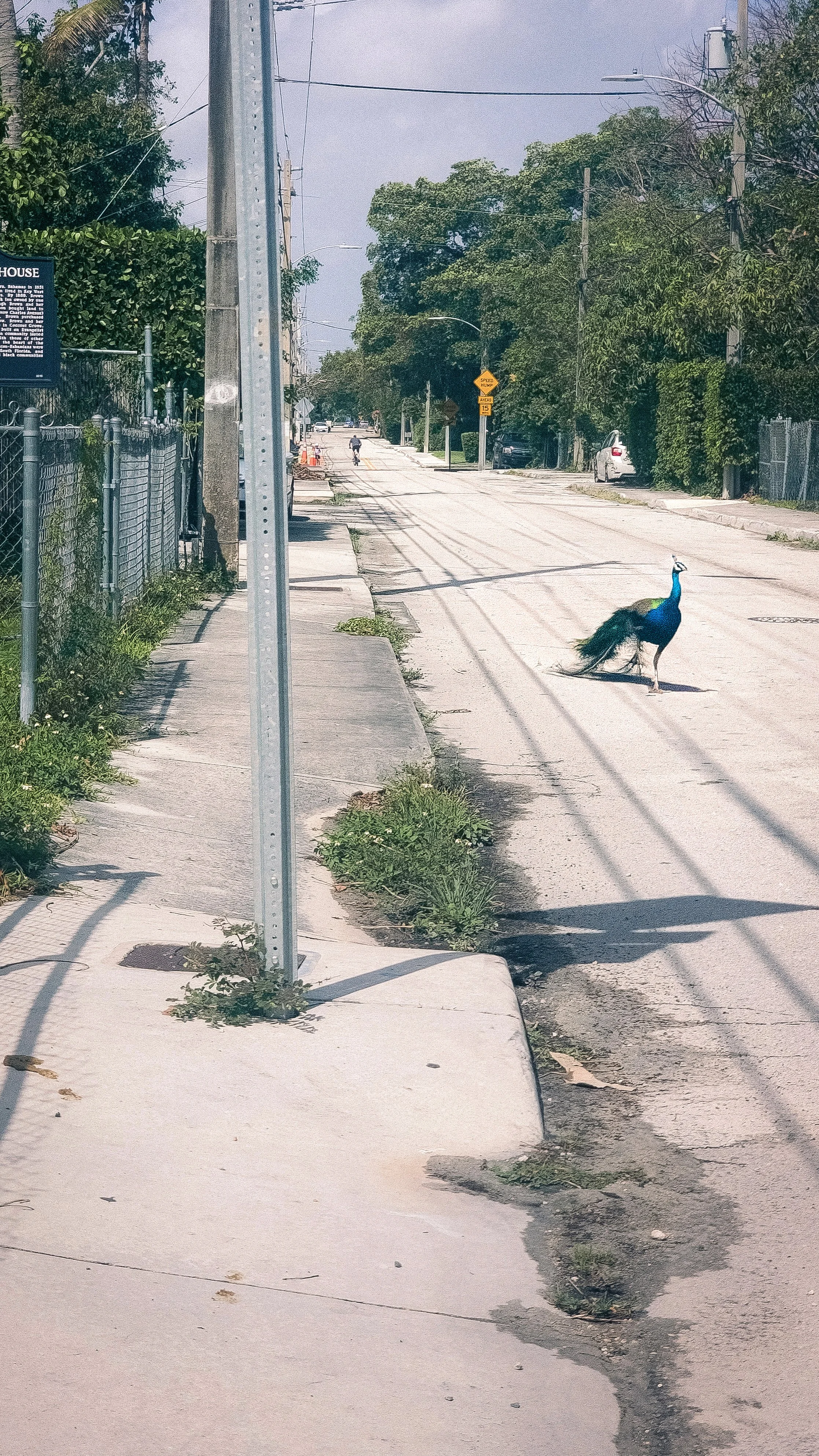
Cutis Urbana began on the street. Each piece is grounded in fieldwork across specific Miami neighborhoods: low-lying wetlands, aging vernacular houses, chain-link property lines, glass towers rising on higher ground, cracked concrete never quite repaired. These photographs are the raw evidence of a territory under pressure, the material I carry back into the studio.
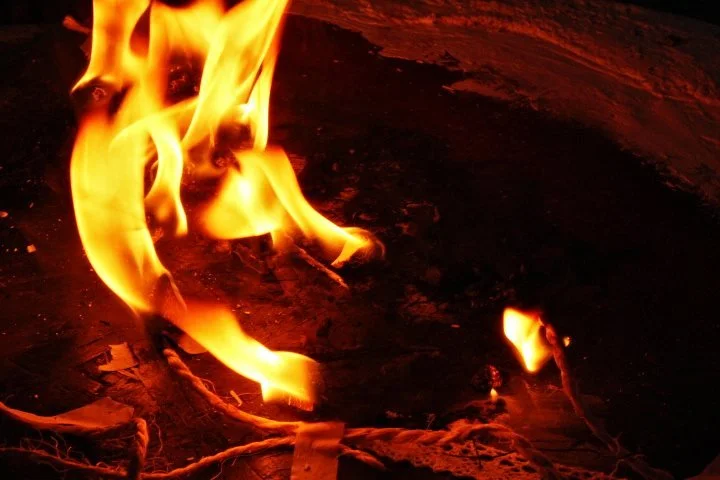
That evidence is then translated through two opposing gestures. Thread anchored across the surface stands in for the measurable forces shaping the territory (elevation, capital, human and sensory flows, flood risk, property value). Meanwhile, expanses of white plaster and raw ground act as erasure: the whitening and blanking out of a neighborhood's history by real estate specifiers. Controlled burning registers what data cannot hold: rupture, memory, and the emotional residue of a place. The fire is a repeated act, worked directly into canvas, plaster, and raw matter until the surface itself carries the scar of what the neighborhood has been through: renovated, redlined, erased, rebuilt.
The result is a surface that holds at once the geometry of thread, the unpredictable edge of char and the colors of urban spaces. Together they hold what a map can show and what going through the territory actually feels like.




PREVIOUS WORKS
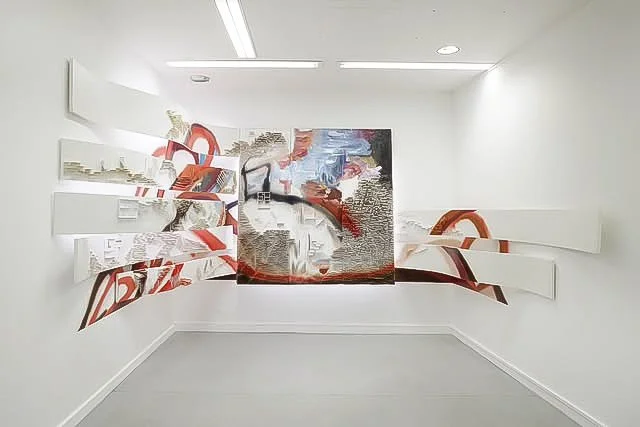
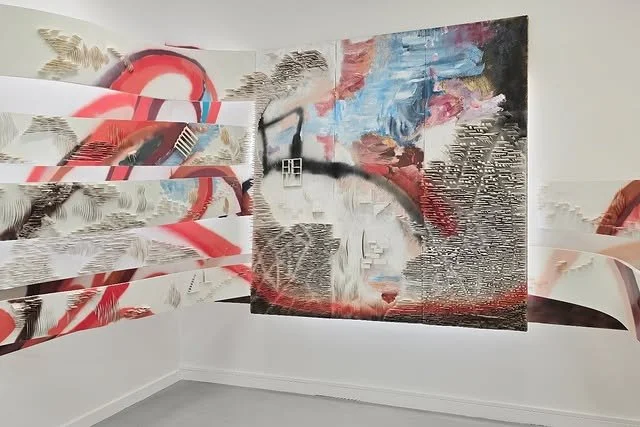
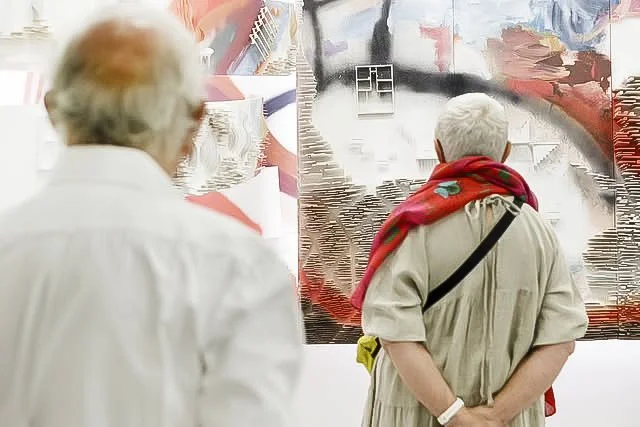
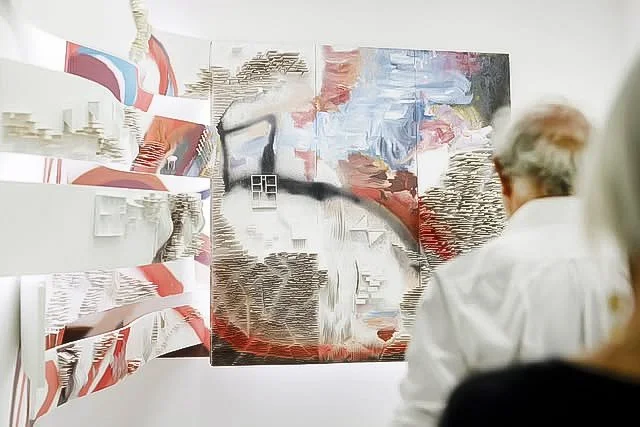
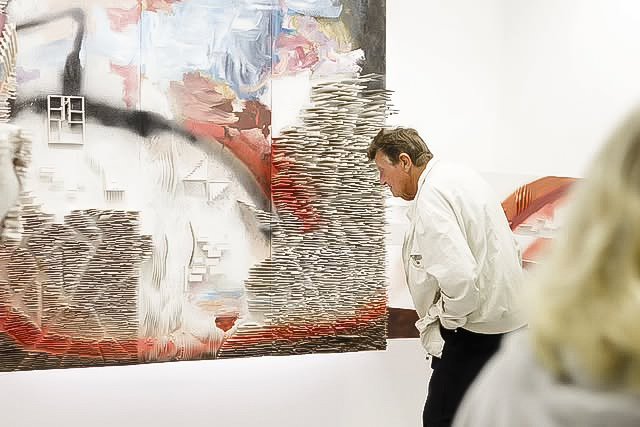
Installation Sculpture de Johanna Mirabel et Esther Mirabel pour le FRAC Auvergne, bois, techniques mixtes, 180 x 400 x 100 cm
6 rue du Terrail, 6300 Clermont-Ferrand.
Exposition visible jusqu’au 17 Janvier 2026.
INSTALLATION 10.25 FOLIE À 2


Installation Sculpture de Johanna Mirabel et Esther Mirabel pour l’Exposition Adieu la Chair, Galerie Nathalie Obadia, bois, techniques mixtes, 180 x 400 x 100 cm
3 rue du Cloître Saint-Merri, Paris
Exposition visible du 07 Septembre au 19 Octobre 2024.
INSTALLATION 09.24 FOLIE À 2
Montage de l’installation Folie à 2
Crédits Vidéo À FAIRE


Installation Sculpture de Johanna Mirabel et Esther Mirabel pour l’Exposition Hit Again, 10ème édition de la Bourse REVELATIONS EMERIGE, plâtre, bois, techniques mixtes, 250 x 450 x 150 cm
190 rue Lecourbe, Paris
Exposition visible du 05 Octobre au 05 Novembre 2024.
INSTALLATION 10.23 MEMORY PALACE N°2


Installation Sculpture de Johanna Mirabel et Esther Mirabel pour l’Exposition Confluences, au sein de la Fondation H, plâtre, bois, techniques mixtes, 250 x 450 x 150 cm
24 rue Geoffroy l’Asnier, Paris
Exposition visible à la Fondation H, du 27 mai au 10 juin 2023.
Crédits photos Studio Vanssay